
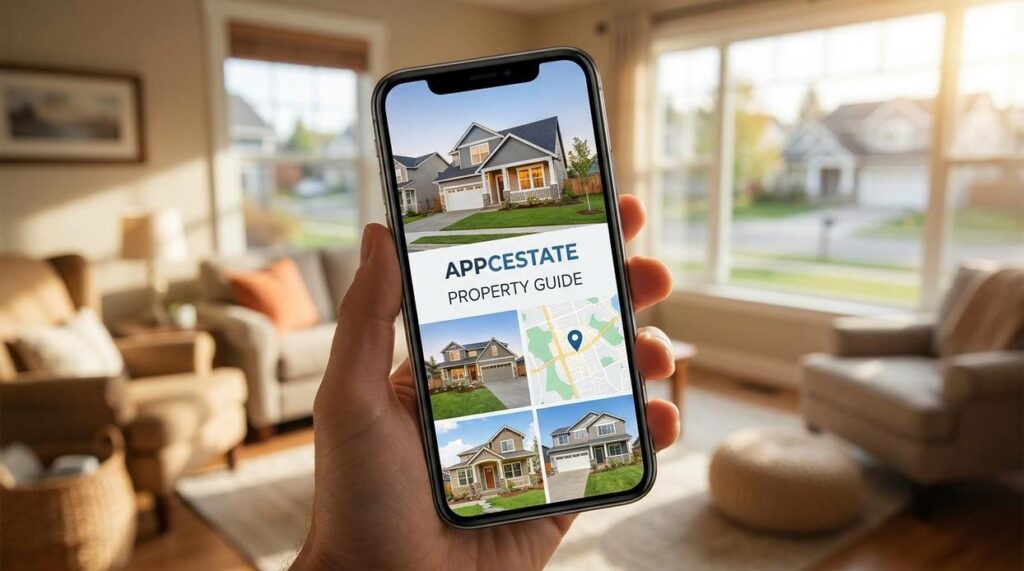
I’ve helped hundreds of property buyers and sellers who wasted months jumping between websites, apps, and spreadsheets trying to find the right home.
You’re probably frustrated with how scattered the real estate search process is. I know that feeling.
Here’s the reality: most real estate apps give you listings and nothing else. You still need five other tools to actually make a decision.
A property guide appcestate changes that. It puts discovery, research, financing info, and next steps in one place on your phone.
I’ve spent years analyzing what actually works in real estate technology. Not what looks good in demos. What helps real people buy and sell properties faster.
This guide breaks down the features that matter. I’ll show you what separates apps that waste your time from ones that save it.
You’ll learn which functions are non-negotiable, which advanced features actually add value, and what design elements make an app worth using every day.
No fluff about the future of proptech. Just the features you need right now to make better property decisions.
Beyond the Search Bar: The Evolution of Real Estate Apps
I remember house hunting in 2015.
I’d screenshot listings on Zillow, email them to my agent, text my wife, then try to remember which property was which when we finally scheduled showings three days later.
It was chaos.
Real estate apps back then were basically digital newspapers. You could browse listings and that was about it. Everything else still happened through phone calls and scattered email threads.
That’s changed.
Today’s platforms like appcestate aren’t just search tools anymore. They’re command centers for your entire property journey.
Think about it. You find a listing you like, schedule a showing, message your agent, run mortgage calculations, and share everything with your partner. All without leaving the app.
Some people argue this makes the process too impersonal. They say real estate is about relationships and face-to-face interaction matters more than convenience.
I get where they’re coming from. But here’s what they’re missing.
Having everything in one place doesn’t replace human connection. It just removes the friction that wastes everyone’s time.
The real shift isn’t about technology replacing agents. It’s about getting instant access to what you need when you need it. Real-time market data. Price drop alerts. New listings the moment they hit the market.
That’s the difference between seeing a property and missing it because you checked your email too late.
A property guide appcestate approach means you’re not juggling five different apps and twenty browser tabs. You’re focused on what matters: finding the right home.
The Core Feature Checklist: Non-Negotiables for Any Real Estate App
I remember downloading my first property app back in 2017.
It looked great in the screenshots. But when I actually tried to use it? Total mess. The filters were basic. The photos were grainy. And good luck figuring out if a property was in a flood zone.
That’s when I realized something. Most real estate apps are built by people who’ve never actually searched for a home.
They think pretty pictures and a price slider are enough.
They’re wrong.
After spending the last six years testing dozens of these apps (and building a few myself), I know exactly what separates the good ones from the garbage. Let me walk you through what actually matters.
Advanced Search & Granular Filters
Here’s what drives me crazy.
You open an app and it lets you filter by price and number of bedrooms. That’s it.
But when you’re actually buying a home? You need way more than that.
I need to see school district ratings because my kids’ education matters. I want property tax history so I’m not blindsided by a massive bill next year. HOA fees can make or break a budget, yet half these apps don’t even list them.
Crime rates? Commute times to my office?
These aren’t nice-to-haves. They’re deal-breakers.
The best apps I’ve tested let you stack filters until you find exactly what you need. Not just what the algorithm thinks you want.
High-Fidelity Visuals
Low-resolution photos should be illegal in real estate apps.
I’m serious. You’re asking someone to make a six-figure decision based on images that look like they were taken with a flip phone from 2005.
When I was house hunting last year, I skipped any listing that didn’t have professional photos. And I wasn’t alone. According to the National Association of Realtors, 87% of buyers found photos very useful in their home search.
Video walkthroughs changed everything for me. I could see how rooms actually connected. Whether the kitchen felt cramped or spacious.
And 3D virtual tours? Game changer. I eliminated three properties without ever leaving my couch because the virtual tour showed me what the photos tried to hide.
Your app needs all three. High-res galleries, professional video, and 3D tours. Anything less and you’re wasting everyone’s time.
Interactive Map Layers
Most apps give you a basic map with pins.
Cool. But what am I supposed to do with that?
The apps worth using let you overlay actual data. Property lines so you know where your yard ends. Flood zones because nobody wants that surprise. Nearby amenities like parks and grocery stores.
I once found a property guide appcestate resource that showed me zoning information right on the map. Turned out the lot next door was zoned commercial. Saved me from making a huge mistake.
Some people say you should just research this stuff separately. Pull up five different websites and cross-reference everything manually.
But why? The technology exists to put it all in one place.
Integrated Financial Tools
Here’s where most apps completely drop the ball.
They show you a beautiful home. You fall in love with it. Then you have to leave the app, open your calculator, pull up mortgage rates, estimate closing costs, and try to figure out if you can actually afford it.
By the time you’re done, you’ve lost momentum.
The apps I actually use have calculators built right in. Mortgage estimates based on current rates. Closing cost projections. Property tax breakdowns. Insurance estimates.
I can see a listing and know within 30 seconds if it fits my budget.
That’s not convenience. That’s basic functionality.
After testing apps for this long, I can spot the ones that were built by people who actually care. They don’t just look good. They work the way your brain works when you’re searching for a home.
Everything else is just noise.
Next-Generation Features: What Sets the Best Apps Apart
Most real estate apps do the same thing.
You scroll through listings. You filter by price and bedrooms. Maybe you save a few favorites.
That’s it.
But here’s what I’ve noticed. The best apps are starting to do something different. They’re not just showing you properties anymore. They’re actually helping you find the right one.
AI-Powered Property Matching
Think about how Netflix knows what you want to watch before you do.
The top apps are using that same approach with real estate. Machine learning tracks what you look at. How long you spend on certain photos. Which neighborhoods you keep coming back to.
Then it suggests properties you never searched for but might actually love.
Some people say this is just a gimmick. That nothing beats a good old-fashioned search with the right filters. And sure, if you know exactly what you want down to the square footage, maybe that’s true.
But most buyers don’t know what they want until they see it. I’ve watched people fall in love with homes they would’ve scrolled right past.
Augmented Reality Integration
Here’s where things get interesting.
You’re driving through a neighborhood you like. You point your phone at a house and boom. The app tells you it’s for sale, shows you the price, and lets you schedule a showing right there.
No more wondering if that nice house on the corner is available.
The second use case? Virtual staging. You walk into an empty room and your phone shows you what it would look like with furniture. Not some generic rendering either. Actual pieces you could buy.
It sounds like science fiction but it’s here now. Companies following the property guide appcestate model are already rolling this out.
Collaborative Tools
Buying a home isn’t a solo decision for most people.
You need your partner to weigh in. Maybe your parents want to see what you’re looking at. Your agent needs to know which properties you’re serious about.
The best apps let you create shared collections. You and your spouse can both save favorites to the same list. Leave private notes that only you two can see. Rate properties so you remember which ones you actually liked three weeks later.
Then you can loop in your agent with one tap. No more screenshot texts or forwarded emails.
Secure Document Portal
Nobody talks about this part but it matters.
You find a property you love. Now you need to move fast. Pre-approval letter, offer documents, inspection reports. It all needs to happen quickly and securely.
Some apps still make you email PDFs back and forth like it’s 2010. The better ones have built-in portals where you upload everything once. Your agent can access what they need. You can e-sign offers from your phone while sitting in the driveway.
Is this overkill for some buyers? Maybe. If you’re casually browsing and not ready to pull the trigger, you don’t need half these features.
But when you’re ready to move? When you find that perfect place and need to act before someone else does?
That’s when these tools stop being nice-to-haves and start being the reason you got the house.
You can check out appcestate property tips from activepropertycare for more on how technology is changing the way people buy homes.
User Experience (UX) is Everything: A Guide to Smart Design
You open a real estate app for the first time.
Within seconds, you know if it’s worth keeping or deleting.
That’s UX in action. And in real estate apps, it makes or breaks everything.
Intuitive Navigation and Clean UI
Your app needs to work from the first tap. I’m talking about finding listings, saving favorites, and contacting agents without hunting through menus.
If users need a tutorial just to search for homes, you’ve already lost them.
Keep it clean. One or two taps to any major feature. No clutter filling the screen.
Performance and Speed
Here’s what kills apps faster than anything else: lag.
Maps that stutter. Photos that take forever to load. Data that refreshes slower than a dial-up modem (remember those?).
Users won’t wait. They’ll close your app and open another one.
Everything needs to load instantly. Property photos, map views, listing details. All of it.
Customizable Notifications
Nobody wants their phone buzzing every five minutes.
But they do want alerts for things that matter. New listings in their search area. Price drops on saved homes. Offer status updates.
The key? Let users control what they get notified about. Give them the power to turn things on or off.
A good property guide appcestate approach means respecting user preferences.
Cross-Platform Syncing
I save a home on my phone during lunch.
Later, I want to review it on my laptop at home.
If that saved property isn’t there? That’s a problem.
Your users move between devices constantly. Phone, tablet, desktop. Their saved homes, notes, and search history need to follow them everywhere.
Seamless syncing isn’t optional anymore. It’s expected.
Choosing the Right Digital Tool for Your Property Journey
You now have a complete framework for evaluating any real estate guide mobile application.
The property market is complex. You need a digital solution that’s powerful but still easy to use.
An app built with the core and advanced features I covered here changes everything. It turns a stressful process into something streamlined and backed by real data.
I’ve shown you what matters and what doesn’t. You can cut through the marketing hype and find tools that actually work.
Here’s your next step: Use this guide as your personal checklist. Compare apps against these standards. Look for one that checks the boxes on both basic functionality and advanced capabilities.
The right property guide appcestate becomes your trusted partner. It should make you feel more confident, not more confused.
Don’t settle for apps that promise everything but deliver half-baked features. You deserve better than that.
Take what you’ve learned here and start your search. Your next real estate venture depends on having the right tools in your pocket.
 Kamil Sowaak is the Founder of